Eating at Home in Seoul — A Summer of Homesul and Homebap
Contents
A summer of meals eaten at home, collected on one page. Restaurant trips are kept separate — this is only what got cooked or ordered in.
Two Korean words cover most of it. Homesul (홈술, “home” + sul/alcohol) is drinking at home rather than going out, and it has become its own small culture here. Yasik (야식) is late-night food, usually ordered in.
Reading these back, they are all really about the same thing: what to buy and what to add to it. Supermarket beef into a delivered broth, hand-boiled noodles into a delivered sauce. Some of those combinations worked better than others.
Kahlúa milk with jjukkumi and yukhoe
Drinking at home. All the food is takeout.
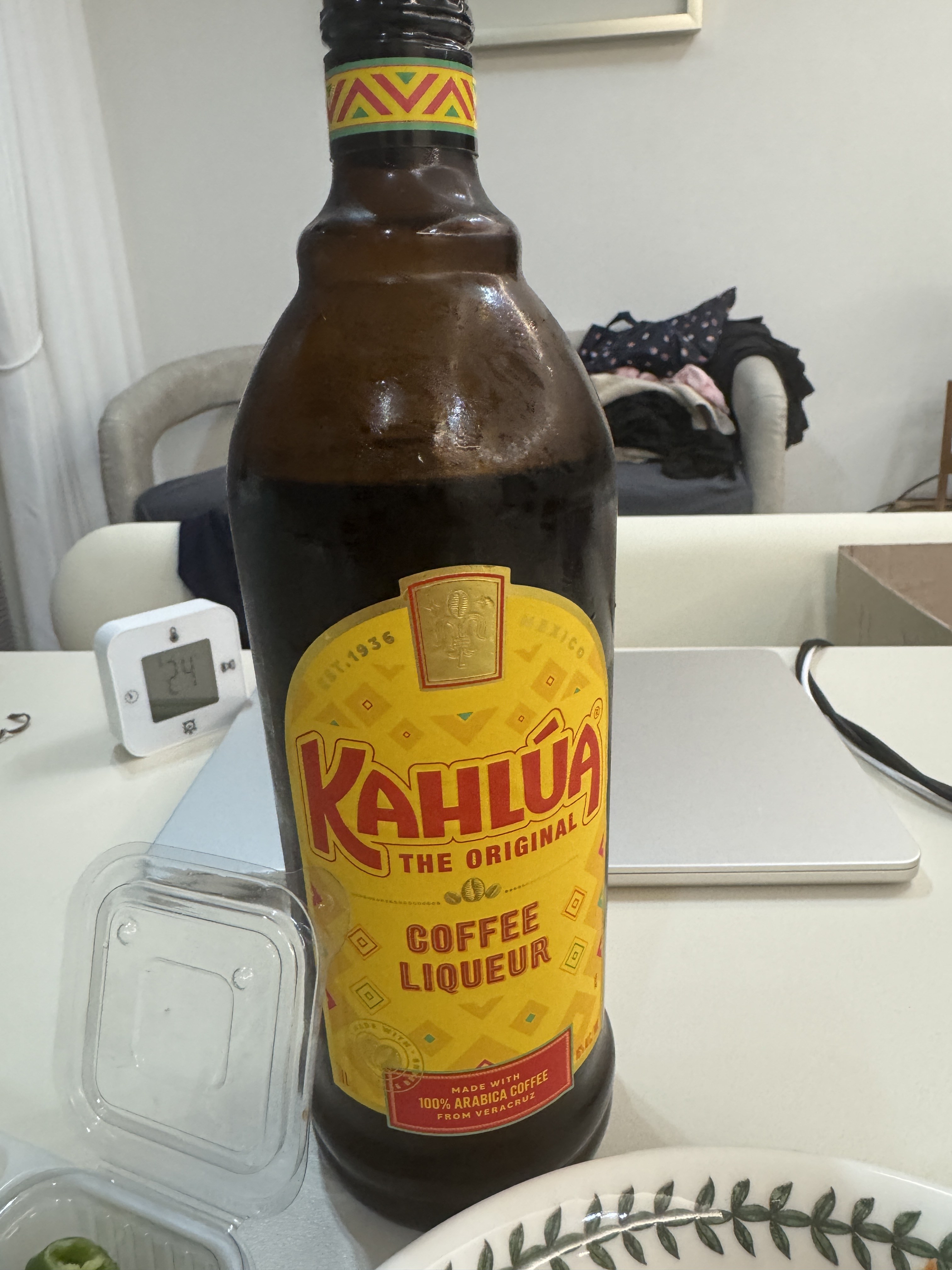
The drink: Kahlúa mixed with milk. Not Korean at all, but it is a beloved “easy mode” drink here for nights when soju feels like too much.
The anju (안주, food eaten specifically with alcohol — a category of its own in Korea, not just a side dish):
- Jjukkumi-bokkeum (쭈꾸미볶음) — stir-fried baby octopus in a spicy gochujang sauce. The heat plays surprisingly well against the sweet, milky Kahlúa
- Yukhoe (육회) — Korean-style beef tartare seasoned with sesame oil. Nutty, chewy, needs no explanation
I expected spicy anju to clash with a sweet drink, and the opposite happened. The milk blunts the heat, so you keep alternating. It is a completely different rhythm from spicy anju with soju.
Takeout containers, comfortable clothes, something on the TV. Homesul has its own charm.
Yasik — sora-muchim and steamed squid
Too lazy to go out, so this arrived by delivery.
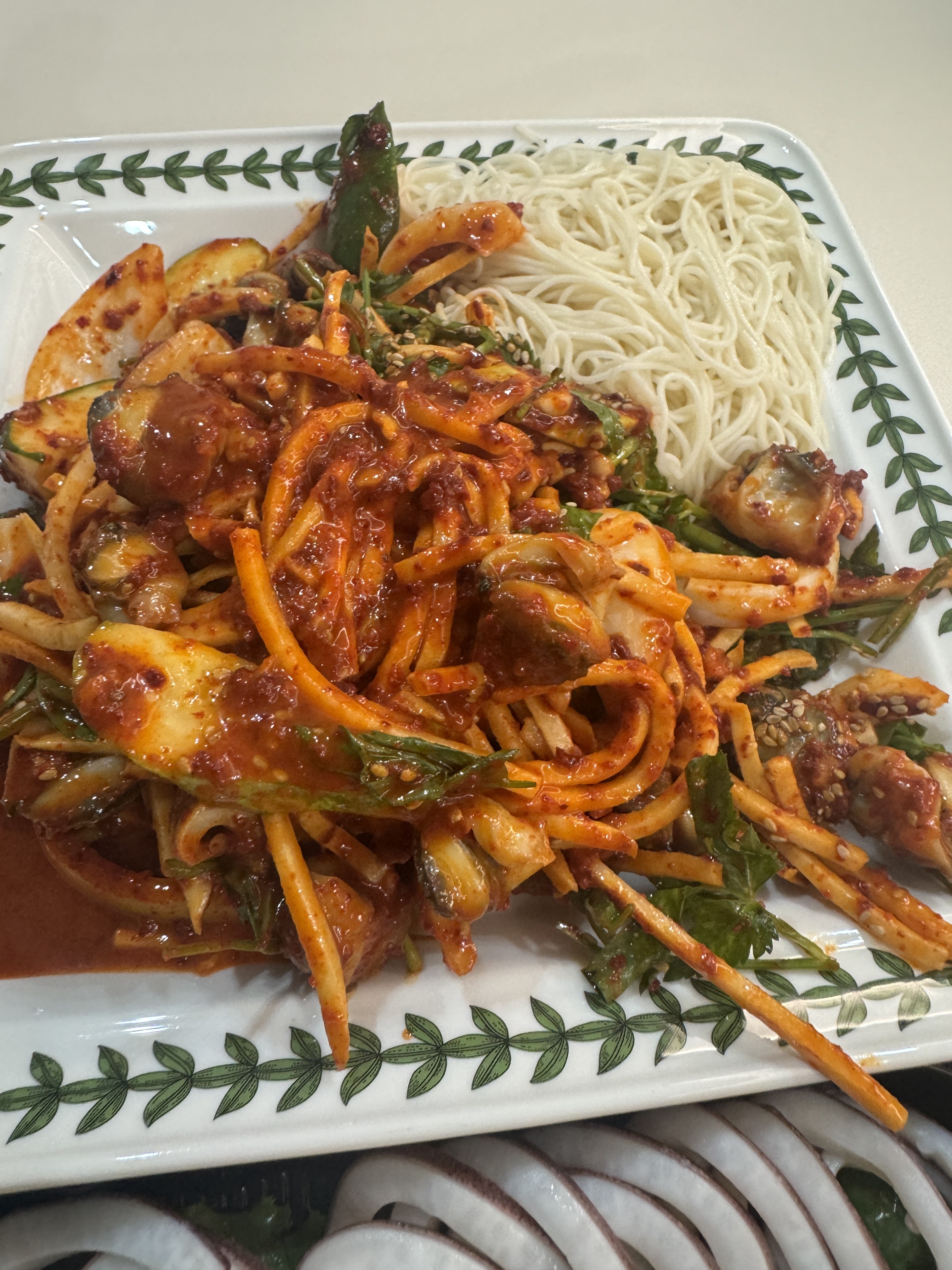
Sora-muchim (소라무침) — sea snails tossed in a chogochujang dressing (gochujang cut with vinegar and sugar) along with minari and perilla leaves. Sweet, sour and spicy all at once. Hard to stop.
The somyeon was boiled at home and added in. Mixing thin wheat noodles into the leftover dressing is arguably the real main course. This is the standard Korean move: order the dish, then stretch the sauce with noodles. Delivered anju always leaves dressing behind, and a handful of somyeon turns that into a second bowl.
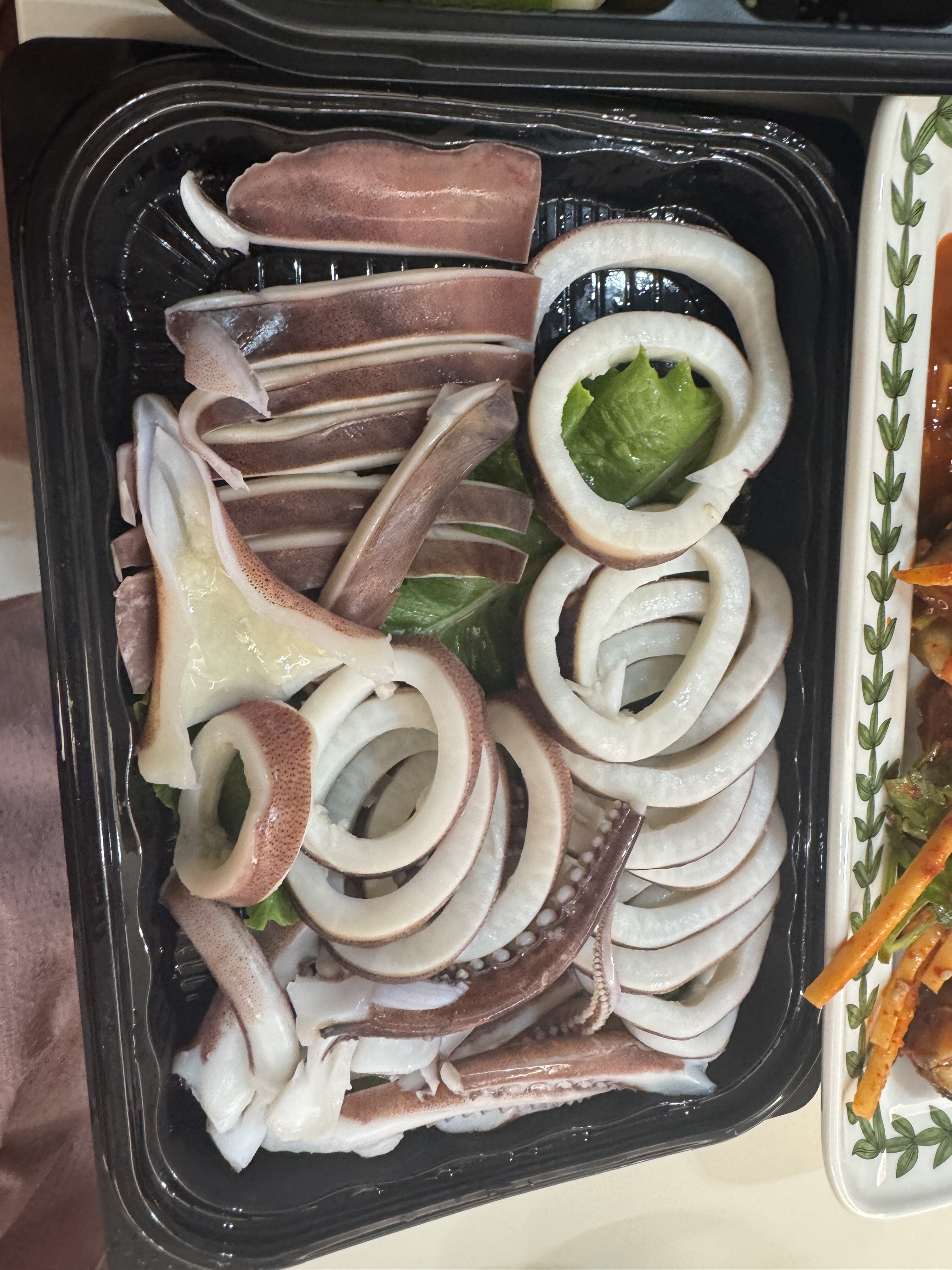
Ojingeo-sukhoe (오징어숙회), briefly steamed squid, is mild enough to alternate with the spicy snails. Dipped in chojang.
Two delivered dishes plus noodles you boil yourself is a complete homesul spread. Nights like this are dangerous.
Deungchon shabu-shabu delivery, supermarket beef
Dinner by delivery, with one hack: the beef came from the supermarket.
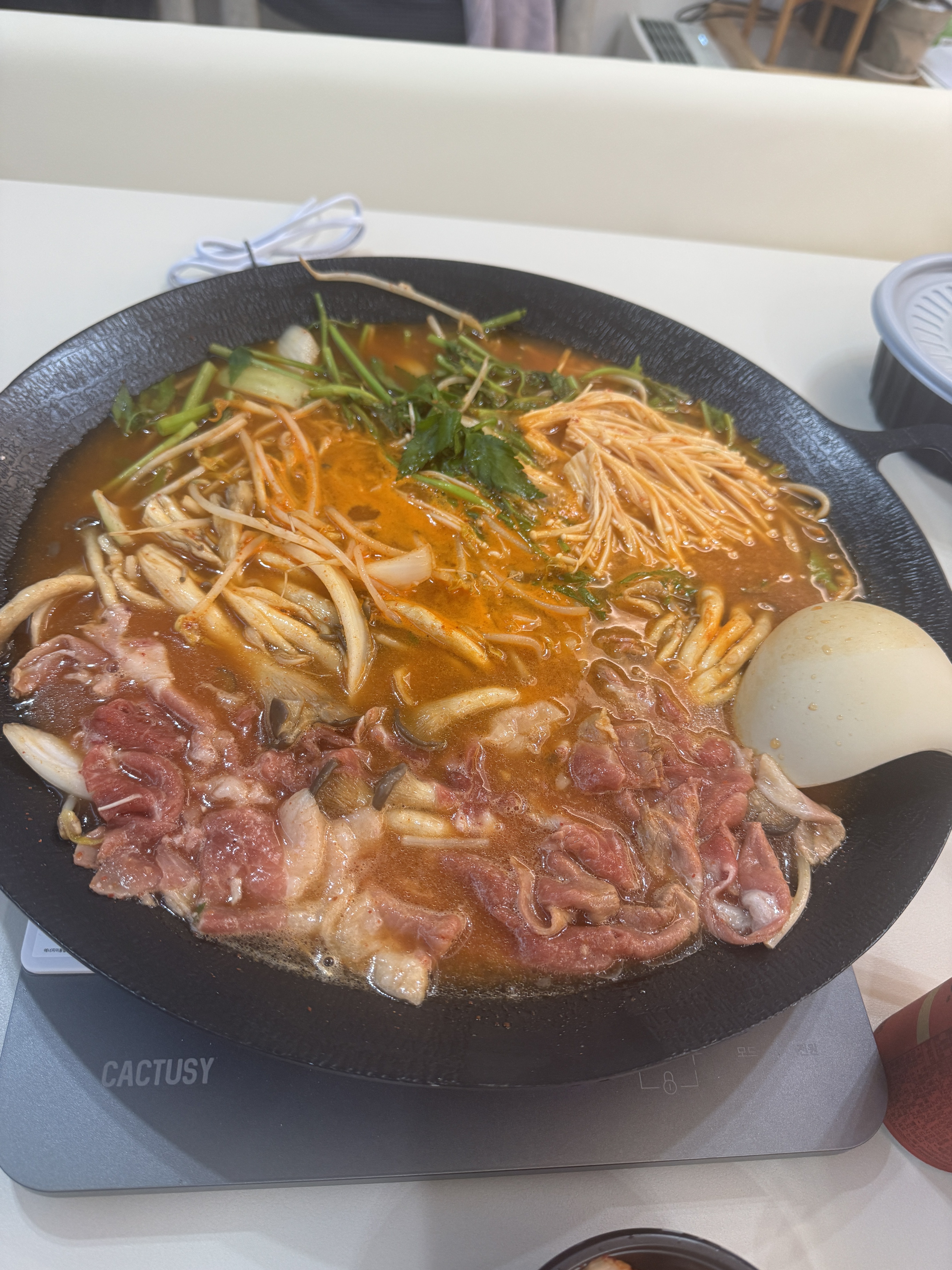
What is Korean shabu-shabu? Korea took the Japanese swish-swish hot pot and made it its own — a spicy, deeply seasoned broth loaded with mushrooms, minari (미나리, water dropwort) and bean sprouts. “Deungchon shabu” is a beloved Seoul style built around that fiery broth.
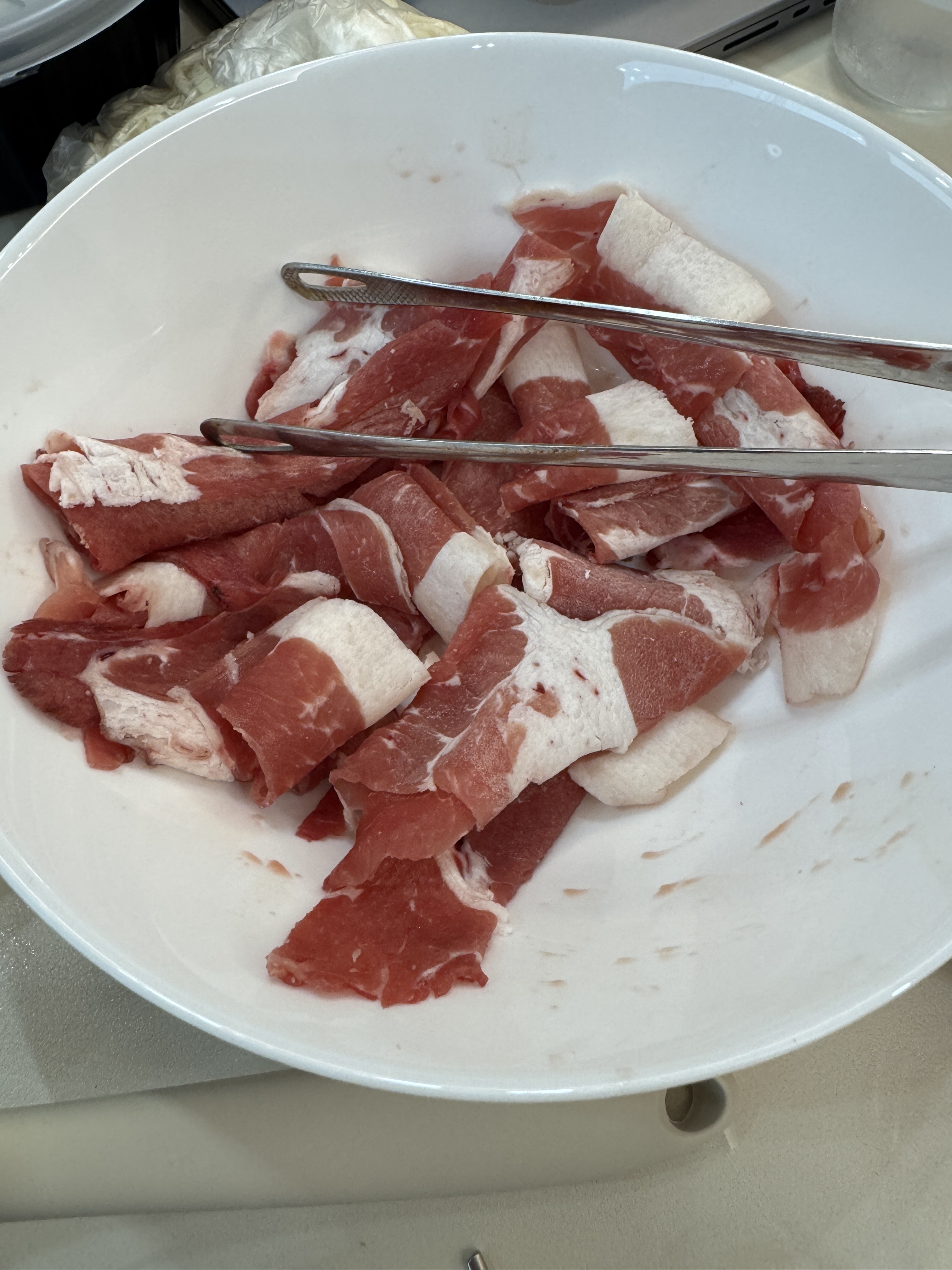
Adding beef through the delivery app costs far more than buying a tray of shabu-sliced beef at the supermarket, and you get less of it. Order the broth, buy the meat yourself. That is the whole trick.
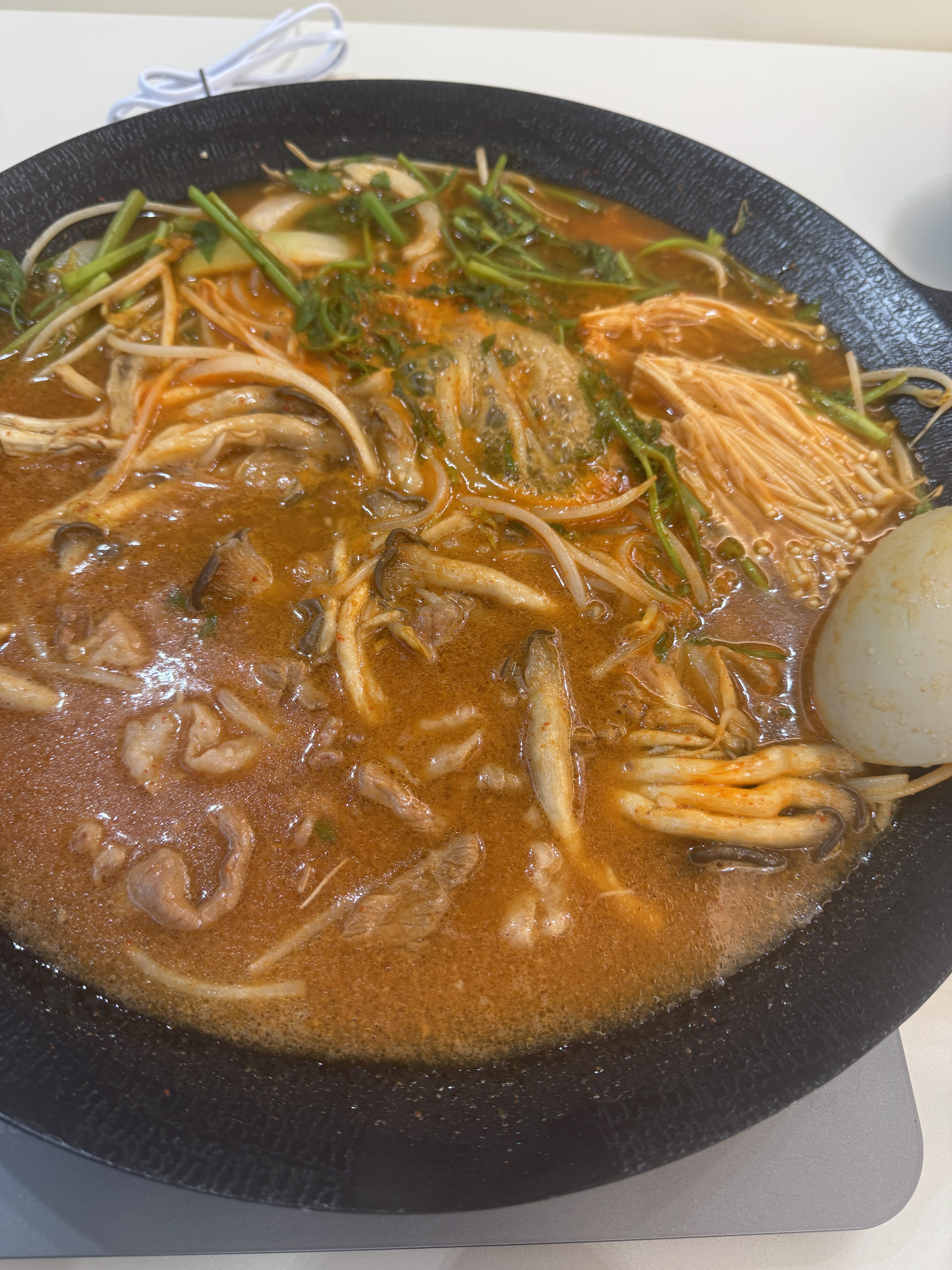
Here is the thing about Korean hot pot: the meal has acts. Once the beef is gone, the broth — now rich with everything that has passed through it — gets kalguksu (칼국수, knife-cut wheat noodles), which drink it up.
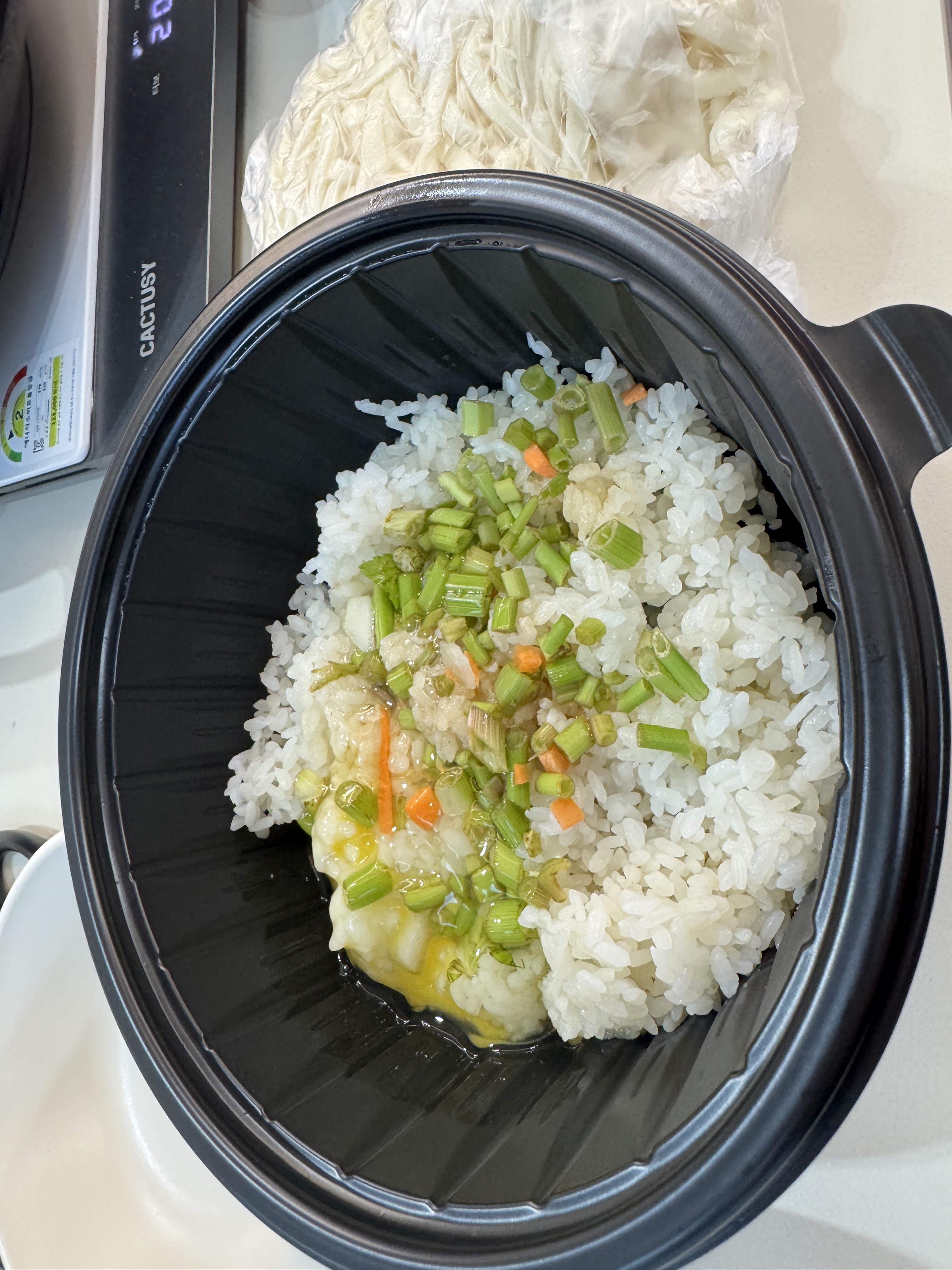
Then the finale. Rice, vegetables and egg go into what is left.
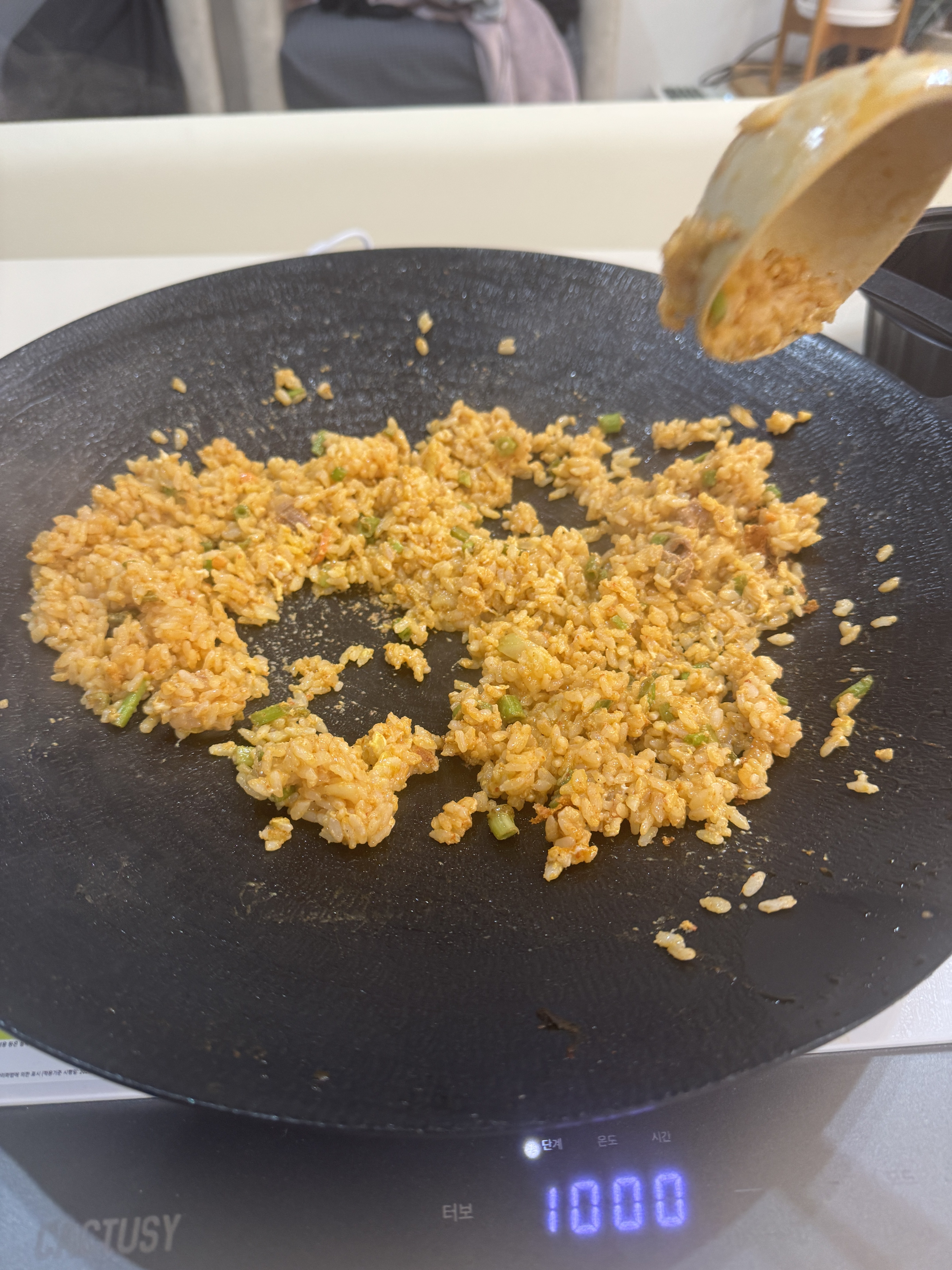
Bokkeumbap (볶음밥, fried rice) scraped off the bottom of the pot, crust and all. Hot pot → noodles → fried rice, the full three acts.
Shabu-shabu is not finished until you have eaten the last course.
Samgyeopsal for lunch, with beef sirloin
Grilling pork belly at home, at lunchtime. Turns out that is allowed.
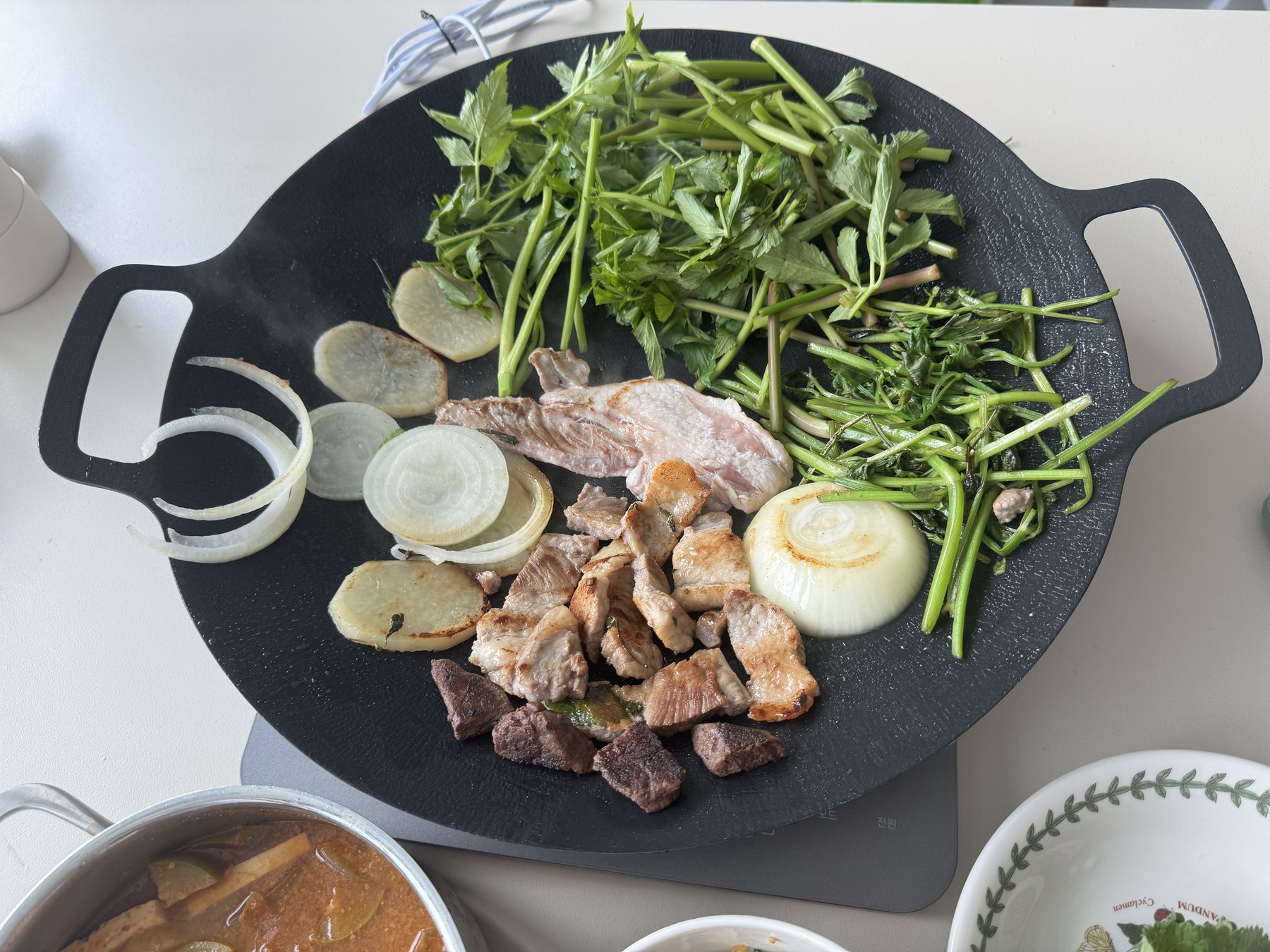
Half the grill is minari. There looks to be more herb than meat and that is correct. Laid down where the fat has pooled, minari wilts and its scent lifts immediately. A piece of samgyeopsal (삼겹살, pork belly) wrapped with a bundle of it cuts the richness completely.
Beef sirloin went on alongside the pork. Sirloin cooks fast, so eat that first and grill the pork belly slowly. Two cuts on one grill is greedy, but it works.
Onion went on in thick rounds and potato in thin slices. Waiting for the potato to brown takes a while and is worth it — crisp outside, soft inside.
There was jjigae (찌개, stew) on the side too. Pork belly plus stew is effectively the end of the discussion.
No alcohol that day, which feels strange with this spread. But it was lunchtime.
Yukhoe and homemade malatang
Yukhoe with malatang made at home. An odd pairing, but both were wanted.
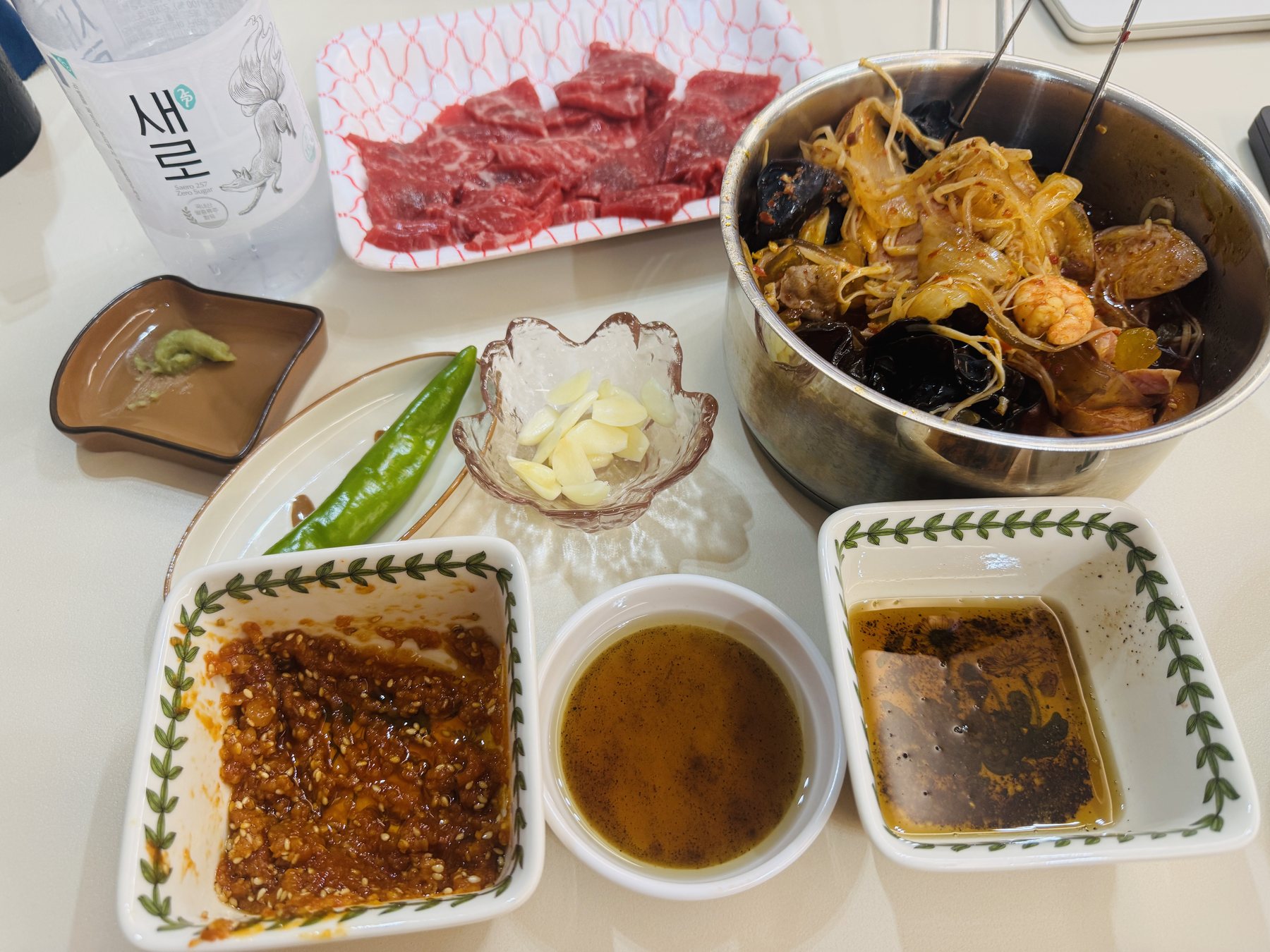
Yukhoe never fails. Dip in sesame-oil-and-salt, add a slice of garlic and a ring of cheongyang chili, done. Chojang was on the table as well, but the hand always goes back to the sesame oil — it stays out of the way of the beef. Wasabi soy sauce was on one side, for whoever wants it.
Malatang (마라탕) is a Sichuan-derived numbing-spicy soup that has become genuinely mainstream in Korea, usually assembled from a pick-your-own ingredient bar. This version was built at home: wood ear mushroom, bean sprouts, shrimp, sausage, medium heat.
There was not enough broth. With that much in the pot it ended up closer to a stir-fry. Pile in the ingredients and you have to scale the liquid with them, which I did not do. More water next time.
The soju got opened after all, despite the previous entry. Yukhoe leaves no choice.
The broth was a miss, but the beef was good, so it counts.
What I would repeat
Reading these back, a few rules fall out.
- Order the broth, buy the meat. Shabu-shabu proved it — same money, very different quantity
- Boil somyeon to go with delivered anju. The leftover sauce becomes a second dish
- Sweet drinks take spicy anju better than expected. Kahlúa milk with jjukkumi
- Use as much minari as meat when grilling. It cuts the fat
- Scale the water with the ingredients in homemade malatang
Eating at home comes down to combinations. Still thinking about what is next.